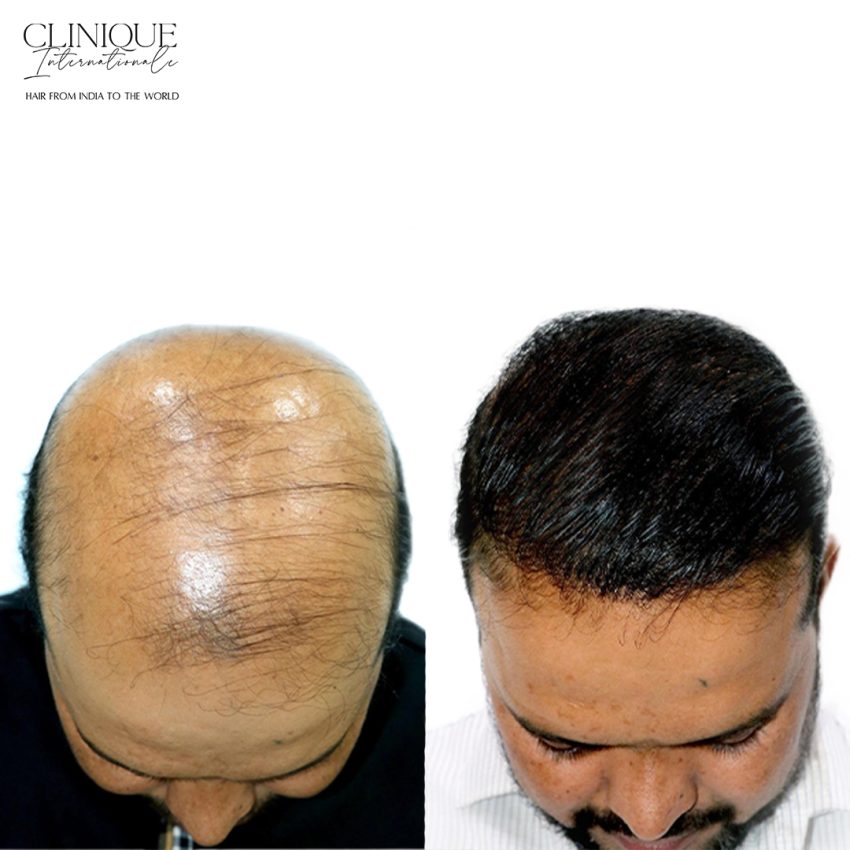
Visakhapatnam has a large workforce connected to the Eastern Naval Command, port operations, steel manufacturing and industrial units. For people working in these environments, hair restoration involves practical questions alongside appearance. Can you wear a cap after surgery? When can you use a safety helmet? Will a short haircut make the extraction marks visible? How much leave should you plan?
If you are considering a Hair Transplant in Visakhapatnam, these questions deserve attention before selecting a clinic or procedure. Your occupation, daily routine, headgear requirements and recovery arrangements should all be discussed during the consultation.
Clinique Internationale’s flagship centre is located in Kharghar, Navi Mumbai, where Hair Transplant Surgeon Dr. Bhavesh Gupta established the clinic in 2012. The clinic also has a centre in J.P. Nagar, Bengaluru, led by chief surgeon Dr. Mohammed Idris, along with centres in Pune and Shirdi. Clinique Internationale does not have a branch in Visakhapatnam.
Patients from Vizag who consider travelling for treatment should confirm the treating surgeon, consultation arrangements, procedure schedule and follow-up support before making travel plans. The choice between Sapphire FUE and DHI depends on individual donor availability, hair-loss pattern and treatment goals.
Caps, Berets and Industrial Hard Hats After Hair Transplant
One of the most important concerns for people working in uniformed or industrial roles is when they can resume wearing headgear.
After a hair transplant, the recipient area needs time to heal. Pressure, friction or accidental contact with newly implanted grafts may interfere with recovery, particularly during the early post-operative period.
A loose cap and a fitted safety helmet do not create the same conditions. The timing for wearing either depends on the procedure, healing progress and the surgeon’s instructions.
Before surgery, discuss:
- When a loose, breathable cap may be permitted.
- When fitted caps or berets can be worn safely.
- When industrial hard hats and other protective headgear can be resumed.
- Whether the helmet’s fit or pressure points need adjustment.
- How to manage work duties if head protection is compulsory.
Do not assume that a particular number of days applies to everyone. Patients who need protective equipment for their jobs should arrange their leave and return-to-work schedule with the treating surgeon. Workplace safety requirements should never be ignored.
Short Haircuts and Sapphire FUE
People who maintain crew cuts, service haircuts or other short hairstyles often worry about visible extraction marks.
Sapphire FUE involves extracting individual follicular units from the donor area, usually at the back and sides of the scalp. The extraction points are small, but their visibility depends on healing, skin characteristics, hair density and how closely the hair is cut.
Patients who prefer short hair should discuss donor-area planning before surgery. The surgeon can explain the expected appearance of the extraction area and whether the planned haircut is suitable after healing.
DHI is another implantation approach. It uses an implanter pen to place extracted follicles into the recipient area. The choice between DHI and Sapphire FUE should be based on the patient’s scalp, donor supply and restoration goals rather than the assumption that one technique is always better.
Can Beard Hair Be Used as a Donor Source?
In selected patients with limited scalp donor availability, beard hair may be considered as a supplementary source of grafts. However, beard harvesting requires careful planning and is not suitable for every patient.
A 2021 study co-authored by Dr. Bhavesh Gupta and published in the Journal of Maxillofacial and Oral Surgery discusses technical considerations in beard graft harvesting, including its use in selected advanced hair-loss cases.
Read the study: https://pmc.ncbi.nlm.nih.gov/articles/PMC8554956/
Hair Transplant Services and Treatment Options
Clinique Internationale offers different hair restoration approaches depending on the patient’s needs and clinical assessment.
| Service | What It Involves | Suitability |
|---|---|---|
| Sapphire FUE | Individual follicular extraction and recipient-site creation using sapphire blades | Selected cases of hairline, frontal or crown thinning |
| DHI | Implantation of extracted follicles using an implanter pen | Depends on donor supply, pattern and treatment goals |
| Hairline reconstruction | Planning and restoring the front hairline | Based on facial proportions and existing hair |
| Crown restoration | Placement of grafts around the natural crown pattern | Depends on donor availability and coverage needs |
| Female hair transplant | Surgical restoration for selected female hair-loss patterns | After evaluating the underlying cause of thinning |
| Corrective transplant | Addressing concerns from an earlier procedure | Depends on scalp condition and remaining donor hair |
The surgeon should explain the expected coverage, donor requirements, limitations and possible need for future hair-loss management before treatment.
Planning Your Leave Around the Procedure
Patients travelling from Visakhapatnam should discuss the schedule with the clinic before booking tickets. A possible travel and treatment plan may involve the following stages, but the actual number of days and visits can differ.
Before travelling: Share relevant medical information and photographs if the clinic offers an initial remote discussion. Confirm whether an in-person consultation is required before the procedure.
Consultation and assessment: The surgeon examines the scalp, donor density, hair-loss pattern and expectations. Investigations may be advised, and the proposed hairline and graft plan are discussed.
Procedure day: Sapphire FUE or DHI is performed according to the agreed treatment plan. The surgeon provides instructions for protecting the recipient and donor areas.
Post-operative review: The clinic explains scalp washing, medication, physical activity, follow-up and headgear restrictions. Confirm whether a review or first wash is scheduled before travelling home.
After returning home: Follow the prescribed care routine and contact the clinic if you notice unexpected symptoms or have concerns. Return to desk duties, physical work and helmet use only according to medical advice.
Hair growth develops gradually over several months. The final appearance is commonly assessed around 12 months, although individual results and timelines vary.
Hair Transplant Cost in Visakhapatnam
The cost of a Hair Transplant in Visakhapatnam or another city depends on the number of grafts required, the technique, the complexity of the case and the services included in the quotation.
Clinique Internationale’s stated rates are:
- Classic Sapphire FUE: ₹30 per graft.
- Premium direct implantation: ₹50 per graft.
- GST: 5% additional.
For an illustrative case requiring 1,400 grafts:
| Treatment | Before GST | GST (5%) | Total |
|---|---|---|---|
| Classic Sapphire FUE | ₹42,000 | ₹2,100 | ₹44,100 |
| Premium direct implantation | ₹70,000 | ₹3,500 | ₹73,500 |
The clinic’s stated package inclusions should be confirmed before booking. These may include investigations, a post-procedure PRP-assisted head wash and hair-care support. A PRP-assisted head wash is not the same as a separate PRP therapy programme.
Patients comparing local treatment with travel should include flights, accommodation, local transport and any additional consultation or follow-up visits in their budget. EMI options may be available, subject to eligibility and the payment provider’s terms. Confirm the current rates and payment conditions directly with the clinic.
Travelling from Visakhapatnam for Treatment
Patients from Visakhapatnam, Vizianagaram, Srikakulam, Anakapalli and Kakinada may explore treatment at Clinique Internationale’s centres outside Andhra Pradesh.
Before travelling, confirm:
- Which branch will perform the procedure.
- Whether an in-person consultation is needed beforehand.
- The total estimated cost and package inclusions.
- How many days you should plan to stay.
- Whether a post-operative review is required before returning.
- Whom to contact if you have concerns after reaching home.
Flight schedules and travel times change, so check current availability before making arrangements. Your return journey should also be planned around the surgeon’s advice and your recovery.
Results and Long-Term Hair-Loss Management
Hair transplant outcomes vary according to donor quality, graft placement, scalp health, healing and individual hair characteristics. Transplanted follicles may continue producing hair over the long term, but existing non-transplanted hair can still thin.
Some patients may be advised to use prescribed topical or oral medication to manage ongoing hair loss. PRP therapy may also be discussed as a separate option for selected patients, but it should not be presented as a guaranteed way to prevent hair loss or secure transplant results.
Whether you search for a hair transplant clinic near Visakhapatnam or consider travelling to another city, assess the surgeon’s qualifications, involvement in the procedure, treatment planning and aftercare arrangements. Advertising claims such as “best clinic” or “best surgeon” should not replace a proper consultation.
Frequently Asked Questions
1. What is the cost of a hair transplant at Clinique Internationale?
The stated rates start at ₹30 per graft for Classic Sapphire FUE and ₹50 per graft for Premium direct implantation, with 5% GST additional. The final cost depends on the graft requirement and confirmed package inclusions.
2. Can I have Sapphire FUE if I prefer a crew cut?
It may be possible, depending on your donor area, scalp condition and hair characteristics. Discuss the expected appearance of extraction points and the timing of short haircuts with the surgeon.
3. What is the difference between DHI and Sapphire FUE?
Both methods involve extracting individual follicular units. Sapphire FUE uses sapphire blades to create recipient sites, while DHI uses an implanter pen to place the grafts. The suitable technique depends on the treatment plan.
4. When can I wear a cap or industrial helmet after surgery?
There is no universal timeline. A loose cap, fitted cap and industrial helmet can apply different levels of pressure and friction. Resume wearing them only after the treating surgeon confirms that it is appropriate.
5. How many grafts will I need?
The number depends on the size of the area being restored, donor density, hair characteristics and desired coverage. An examination is needed to establish a suitable graft plan.
6. Can I plan a hair transplant around my work leave?
Yes, but the schedule should account for consultation, surgery, post-operative review and recovery restrictions. People whose jobs require helmets or strenuous activity should discuss their duties with the surgeon before selecting a date.
Plan Your Hair Transplant Around Your Duty Schedule
For people working in the naval, port and industrial sectors, hair restoration planning should consider more than the procedure itself. Headgear requirements, short haircuts, physical duties, travel and follow-up care all matter.
Whether you choose a Hair Transplant in Visakhapatnam or consider Clinique Internationale in Navi Mumbai or Bengaluru, ask for a clear treatment plan and individual recovery instructions before making a decision.
Call: +91 90821 23009
Website: https://www.hairclinique.in/