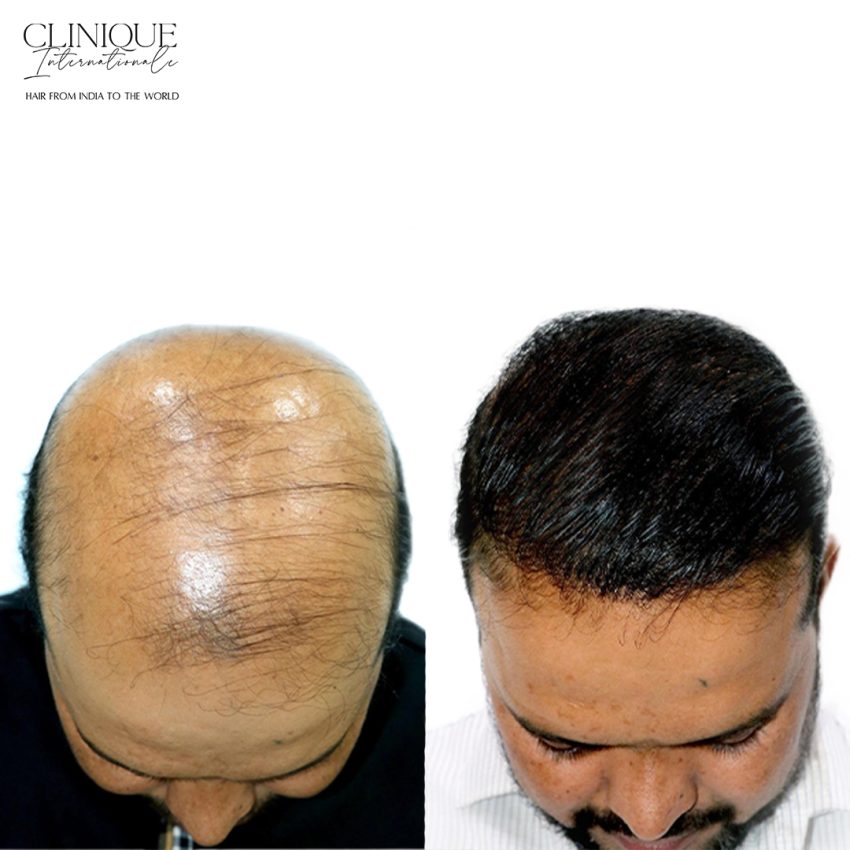
Hair thinning at the crown is not planned in quite the same way as hair loss along the front hairline. The crown area naturally grows hair in a circular pattern around a centre spot, forming a swirl. If transplanted follicles do not follow this pattern, their direction may look different from the surrounding hair. A crown hair transplant therefore requires careful planning of graft direction, placement, density and donor hair use.
Understanding these details explains why crown restoration needs an individual surgical assessment rather than a simple estimate based on the size of the thinning area.
Why Does the Crown Require Specialised Planning?
The crown, also called the vertex, is the upper-back region of the scalp. Hair in this area often grows in a spiral pattern, with its direction gradually changing around the centre of the whorl.
This creates a different placement challenge from the frontal scalp, where hair generally follows a more forward-facing direction. The surgeon needs to examine the existing pattern and plan the recipient area accordingly.
The assessment also considers how much native hair remains, how far thinning extends and whether the crown is changing over time. These details influence whether surgery is suitable and how coverage can be approached.
How Does the Natural Hair Whorl Affect Graft Placement?
The hair whorl is central to crown planning. Its direction, angle and position help guide the placement of transplanted follicular units.
The surgeon examines:
- The location and shape of the central whorl
- The direction of hair growth around the centre
- The angle of the existing follicles
- The transition between thinning and denser areas
- The relationship between the crown and surrounding scalp
Grafts are then planned to follow the natural flow as closely as possible. This requires attention to the orientation of individual recipient sites, not simply the number of follicles placed.
How Many Grafts Does a Crown Hair Transplant Require?
There is no standard graft count that applies to every patient. The requirement depends on the size of the area, the amount of existing hair, donor availability and the coverage that can reasonably be planned.
Hair characteristics also influence the visual appearance of coverage. Hair thickness, texture and contrast with the scalp can all affect how density is perceived.
The surgeon therefore assesses the crown before estimating graft requirements. Using more grafts is not automatically the better approach, particularly when donor hair needs to be preserved for other areas or possible future treatment.
Why Does Donor Hair Availability Matter?
The donor area, typically found along the back and sides of the head, provides the hair follicles used for the transplant. This supply is limited and needs to be distributed carefully.
A person with a thinning crown might also see hair loss in the front or middle of their head. If the treatment plan focuses only on the crown, it may not adequately account for future restoration needs.
The surgeon considers donor density, hair characteristics, the overall pattern of hair loss and the patient’s likely long-term requirements before deciding how to allocate grafts.
A crown hair transplant should therefore be planned as part of the wider scalp-restoration strategy, rather than as an isolated procedure.
Which Transplant Techniques May Be Considered?
FUE and FUT are two established methods that may be considered for crown restoration.
With FUE, individual follicular units are extracted directly from the donor area. With FUT, a strip of scalp tissue is extracted and separated into follicular units.
The choice depends on donor characteristics, scalp suitability, treatment requirements and the surgeon’s assessment. Neither technique is automatically the right choice for every patient.
Regardless of the harvesting method, the recipient-area design and graft orientation remain important parts of crown planning.
What Happens After Crown Hair Transplant Surgery?
Recovery and hair growth take place in stages. The scalp first needs time to recover, while visible growth develops gradually over the following months.
Patients receive individual instructions about scalp care, washing, activity and follow-up appointments. These instructions should be followed carefully so the clinical team can assess recovery and address concerns.
The treating surgeon can explain the expected stages of growth and when progress should be reviewed. The timing and extent of growth vary between individuals.
Why Should Future Hair Loss Be Considered Before Surgery?
A hair transplant moves follicles into selected areas; it does not prevent untreated hair from thinning in the future.
This is important when hair loss is ongoing or affects more than the crown. The surgeon may discuss the wider pattern, the availability of donor hair and whether additional hair-loss management is appropriate.
Planning with these factors in mind helps establish realistic expectations and avoids treating the visible crown area without considering the rest of the scalp.
Arrange a Crown Hair Transplant Consultation in Bangalore
Crown restoration demands attention to the natural swirl, donor supply, and the wider pattern of hair loss. A consultation can help decide whether surgery is appropriate and what coverage may be achievable.
At Clinique Internationale’s Bangalore centre, Dr Idris, MD – Facial Cosmetic & Hair Transplant Surgeon, provides hair restoration consultations. Arrange a consultation at Clinique Internationale Bangalore to discuss your crown thinning, donor-area suitability and possible treatment approach. You can also review the clinic’s hair transplant surgery service.
Frequently Asked Questions
1. Why is the crown whorl important during transplantation?
The whorl creates a circular growth pattern. Grafts need to follow its direction and angle to blend with the surrounding hair.
2. Does crown transplantation always require more grafts than a hairline procedure?
No. Graft requirements depend on the size of the area, existing density, hair characteristics and the coverage planned by the surgeon.
3. Is FUE suitable for crown hair transplantation?
FUE may be suitable for some patients. The decision depends on donor hair characteristics, graft requirements and clinical assessment.
4. When does new hair growth become noticeable after a crown transplant?
Growth develops gradually rather than immediately. The surgeon can explain the expected stages and follow-up schedule based on the procedure.